Today, the rapid depletion of natural resources, increasing amounts of waste, and environmental impacts are forcing us to rethink our production and consumption habits. In the traditional economic model, products are typically manufactured, used, and then discarded at the end of their useful life. The circular economy, however, proposes a system that replaces this approach one in which resources are kept in the economy for as long as possible, waste generation is reduced, and used materials are re-evaluated.
So, what is the circular economy, and why is it important? This model is not limited to recycling alone. It represents a more holistic approach that encompasses the entire process—from production to consumption, and from product design to waste management.
The circular economy is an economic model that aims to preserve the value of products, materials, and resources for as long as possible. The fundamental goal is to create cycles in which products and materials are reintroduced into the economy, rather than following the “use, consume, and discard” mindset.
In this approach, a product’s life cycle consists of more than just the production and consumption stages. The product’s useful life, reuse, repair, recycling, and the reuse of the resulting raw materials in production are also part of the process.
In short, the circular economy aims to convert waste into resources as much as possible and use resources efficiently.
What Is the Difference Between the Circular Economy and the Linear Economy?
The traditional production and consumption system largely operates under the linear economy model. This model can be simply summarized as:
Take → Make → Use → Dispose
In the circular economy, however, the process works differently:
Produce → Use → Collect → Recover → Reuse
The key difference here is that, after use, the product or material is revalued rather than being removed from the system and becoming waste.
For example, throwing away a beverage container after it has been consumed is an example of a linear economy. Separately collecting that same container, recycling it, and using the recovered material to produce new products, on the other hand, is an example of the circular economy approach.
What Are the Fundamental Principles of the Circular Economy?
Recycling alone is not enough to implement a circular economy. Many stages—from product design to waste collection—must be addressed collectively.
1. Using Resources Efficiently
The foundation of the circular economy lies in the more efficient use of natural resources. Developing longer-lasting and more functional products using fewer raw materials helps reduce resource consumption.
2. Extending the Lifespan of Products
Ensuring a product can be used for as long as possible reduces the need to produce new products and the associated resource consumption. Practices such as repair, maintenance, reuse, and refurbishment are therefore important.
3. Reducing Waste Generation
The circular economy aims to prevent waste from being generated as much as possible, rather than viewing it as an inevitable byproduct of the process. This requires reevaluating production processes, product designs, and consumption habits.
4. Returning Materials to the Economy
Recovering materials from products that have reached the end of their useful life helps reduce the need for new raw materials. In this regard, properly sorting, collecting, and directing waste into recycling processes is of great importance.
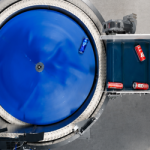
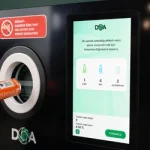
A small deposit fee is added to the product price at the time of purchase.
Consumers recover this fee when they return the empty packaging through the machine.
This method ensures that packaging is immediately directed into the recycling process and provides a strong incentive mechanism that helps change consumer behavior.
Why Is the Circular Economy Important?
The circular economy is important not only in terms of environmental sustainability but also for businesses and the economy.
The limited availability of natural resources, the volatility of raw material costs, and the increasing volume of waste are driving the need for new solutions in both the public and private sectors.
The circular economy approach offers businesses various opportunities, such as:
* Managing resource use more efficiently, * Reducing waste, * Preserving the value of recyclable materials, * Planning operational processes more efficiently, * Contributing to sustainability goals.
From the consumers’ perspective, the circular economy ensures that small choices made in daily life become part of a broader system. Returning packaging to the right location, using products for longer, or repurposing usable products are among the ways this approach manifests in everyday life.
The Role of the Deposit Return Scheme (DRS) in the Circular Economy
For the circular economy to succeed, products must be reintroduced into the system after use. Collection and recovery processes play a critical role in this regard, particularly for products used in large quantities, such as beverage containers.
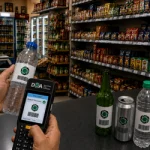
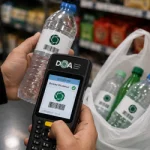
The Deposit Return Scheme (DRS) is one of the systems that supports the collection of deposit-based packaging after consumption through designated return points and directs it to the recovery process.
From the consumer’s perspective, the process is quite simple: The deposit-based packaging is consumed, the packaging is taken to a designated return point, and the return process is completed through the system. This ensures that the packaging returns to the system for reuse rather than being lost as waste.
From the perspective of businesses, the regular collection, sorting, and tracking of deposit-based packaging become crucial. In particular, the effective management of the large volumes of packaging generated at hotels, restaurants, cafes, and other mass-consumption venues is one of the key practices contributing to the circular economy.
Is the Circular Economy the Economic Model of the Future?
As sustainability goals gain importance around the world, the circular economy approach is increasingly coming to the forefront. This is because it is now clearer than ever that existing resources are not unlimited and that simply disposing of waste is not a long-term solution.
The circular economy requires that producers, businesses, consumers, public institutions, and the recycling sector be considered as part of the same system.
The goal here is not merely to increase recycling; it is to create an economic system that preserves the value of products and materials for as long as possible.
For this reason, the circular economy focuses not only on the environmental dimension of sustainability but also on its economic and operational dimensions.
A Cycle from Waste to Resources
What is the circular economy? Simply put, it is an approach that aims to revalue resources after they have been used rather than discarding them outside the system and to keep them within the economy for as long as possible.
Implementing this approach requires the coordinated advancement of many different steps from manufacturers designing more sustainable products to businesses improving their resource and waste management, and from consumers developing proper return and recycling habits to the establishment of effective collection systems.
Initiatives such as the DRS are also key components of this cycle. The systematic collection and diversion of returnable packaging generated after consumption contributes to reintroducing the materials used back into the economy.
What is needed for a more sustainable future is not merely consuming less; it is working together to develop and implement systems that ensure the resources we use remain within the cycle.